The exercises listed below are general recommendations for healthy adults. Before beginning any new exercise programme, consult a qualified health or exercise professional — particularly if you have pre-existing health conditions, injuries, or have been inactive for an extended period.
Bodyweight Exercises
These exercises require no equipment and can be performed at home or outdoors. They are suitable for beginners and can be modified to increase difficulty over time.
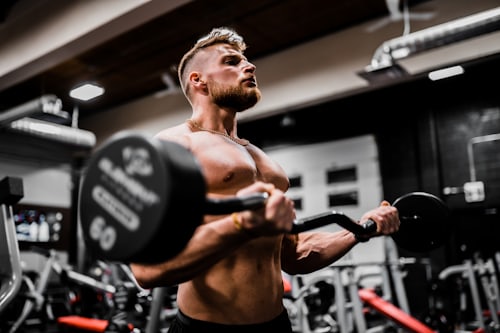
Push-ups
Primary muscles: Chest, anterior deltoids, triceps
How to perform: Start in a high plank position with hands shoulder-width apart. Lower your body until your chest is close to the floor, keeping your core engaged and body in a straight line. Push back up to the starting position. If a full push-up is too challenging, begin with knees on the ground.
Suggested volume: 3 sets of 8–15 repetitions, depending on your current strength level.
Bodyweight Squats
Primary muscles: Quadriceps, glutes, hamstrings
How to perform: Stand with feet shoulder-width apart, toes slightly turned out. Lower your hips as if sitting into a chair, keeping your chest upright and knees tracking over your toes. Descend until your thighs are approximately parallel to the floor, then return to standing.
Suggested volume: 3 sets of 12–20 repetitions.
Plank Hold
Primary muscles: Core stabilisers (rectus abdominis, transverse abdominis, obliques)
How to perform: Support your body on forearms and toes, maintaining a straight line from shoulders to ankles. Avoid letting your hips sag or pike upward. Breathe steadily throughout the hold.
Suggested volume: 3 holds of 20–60 seconds, based on current ability.
Strength Training
Strength (resistance) training uses external loads to challenge muscles. The Australian Physical Activity and Sedentary Behaviour Guidelines recommend muscle-strengthening activities on at least two days per week for adults.
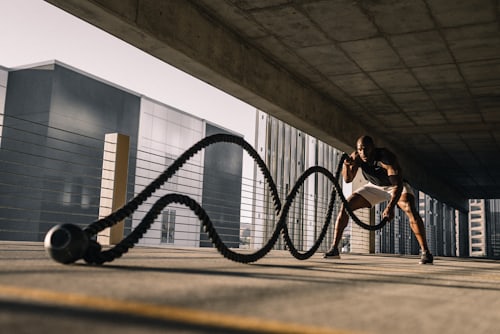
Dumbbell Goblet Squat
Primary muscles: Quadriceps, glutes, core
Hold a dumbbell vertically at chest height with both hands. Perform a squat as described above. The front-loaded weight encourages an upright torso position.
Suggested volume: 3 sets of 10–12 repetitions.
Dumbbell Bent-Over Row
Primary muscles: Latissimus dorsi, rhomboids, biceps
Hinge forward at the hips with a flat back, holding a dumbbell in each hand. Pull the weights toward your ribcage, squeezing your shoulder blades together at the top. Lower under control.
Suggested volume: 3 sets of 10–12 repetitions per arm.
Cardiovascular Exercise
The Australian guidelines suggest adults accumulate 150–300 minutes of moderate-intensity physical activity, or 75–150 minutes of vigorous-intensity activity, per week.
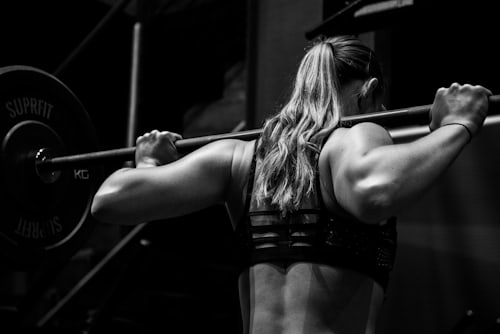
Walking and Jogging
Walking is one of the most accessible forms of cardiovascular exercise. A moderate-intensity walk typically means you can talk but not sing during the activity. Jogging increases the intensity and can be introduced gradually through walk-run intervals.
Cycling
Whether on a stationary bike or outdoors, cycling is a lower-impact alternative to running that still provides cardiovascular benefits. Adjust resistance or terrain to match your fitness level.